

Augusto Paz: the fashion designer who started drawing in Excel
Graduating in textile and fashion from USP, he spent ten years in technology before opening a studio. A burnout led him back to the crochet his grandmother taught him at eight. The third collection, presented this Tuesday in São Paulo, originated from a sales spreadsheet.
Words by

Words by Caíque Nucci
Editor-in-Chief
When his publicist told Augusto Paz that a technology publication wanted to interview him, his first reaction was puzzlement. A stylist trained in textiles and fashion at USP, owner of a made‑to‑measure clothing atelier on Avenida Paulista, he saw no connection. It was only by looking at his own trajectory that he found ten years in the field.
Before the atelier, Augusto led a sentiment‑analysis team on social media when Brazil’s internet was still an open frontier, serviced dozens of Rede Globo products, worked at a marketing agency and ended up as corporate account manager at an artificial‑intelligence firm focused on text analysis. He left after a burnout episode.
It was during his leave that he returned to the crochet his grandmother had taught him when he was eight, the two of them sitting in the bedroom watching a soap opera. He made a sweater for himself, posted it, and the questions about price and where to buy started coming in. He made a second one, and the demand repeated. He pooled his savings and began stitching in his living room.
The decade he thought was lost
The technological prologue is not a digression, and he insists on that. For a while he thought he had wasted the decade. Then he understood the opposite. At the artificial‑intelligence company, the work was to serve large accounts, companies that were not satisfied with off‑the‑shelf products and needed a custom‑built solution. It is the same sentence that describes the studio. "Serving Banco Itaú today helps me serve a client with an extremely high level of demand, who pays great attention to detail and requires very special care."
Stock panic
The choice for made‑to‑measure, instead of a digitally‑born brand, comes from that. He likes to follow the manufacturing, the pattern maker, the screen proofs, even when those stages happen outside his space. "I'm very much a hassle in this sense," he says, using the augmentative he applies to 'annoying'. And he has an uncompromising stance: "I have a stock panic." Stagnant clothing is stagnant money, and it is also a question he prefers not to answer. "The world doesn't need another piece of clothing."
The beginning wasn't organized. When asked about the first collection, he describes himself as a Labrador on a wild career. His education at USP had been broad, covering courses in wiring, chemistry, physics, breeding and administration, but his interest at the time was elsewhere: his final project compared sociological models of trend expression with their statistical counterparts. Filling out a product technical sheet was not on the horizon. “That’s when it really hit me.” He learned production on the job, and spent money that never came back.
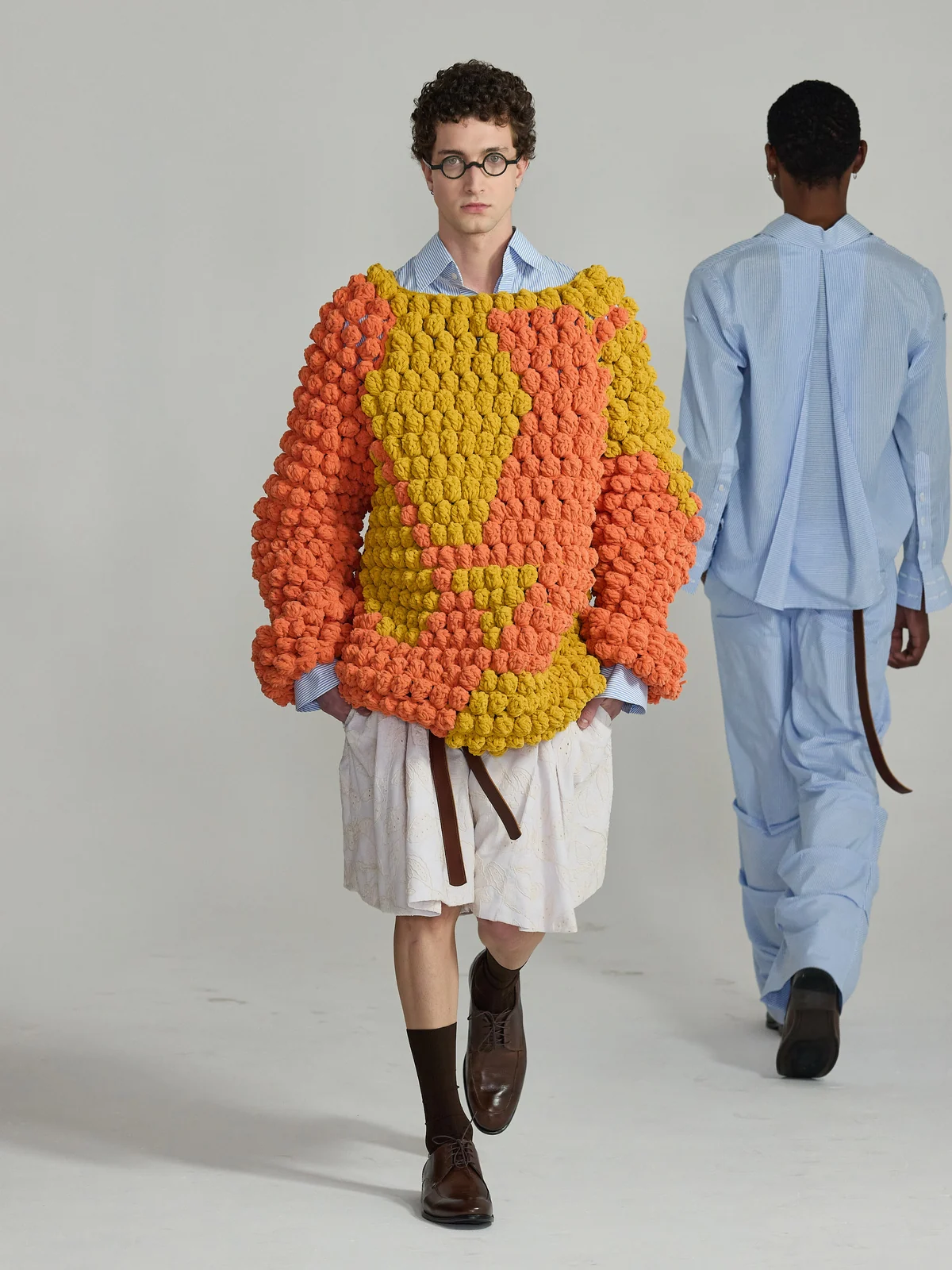
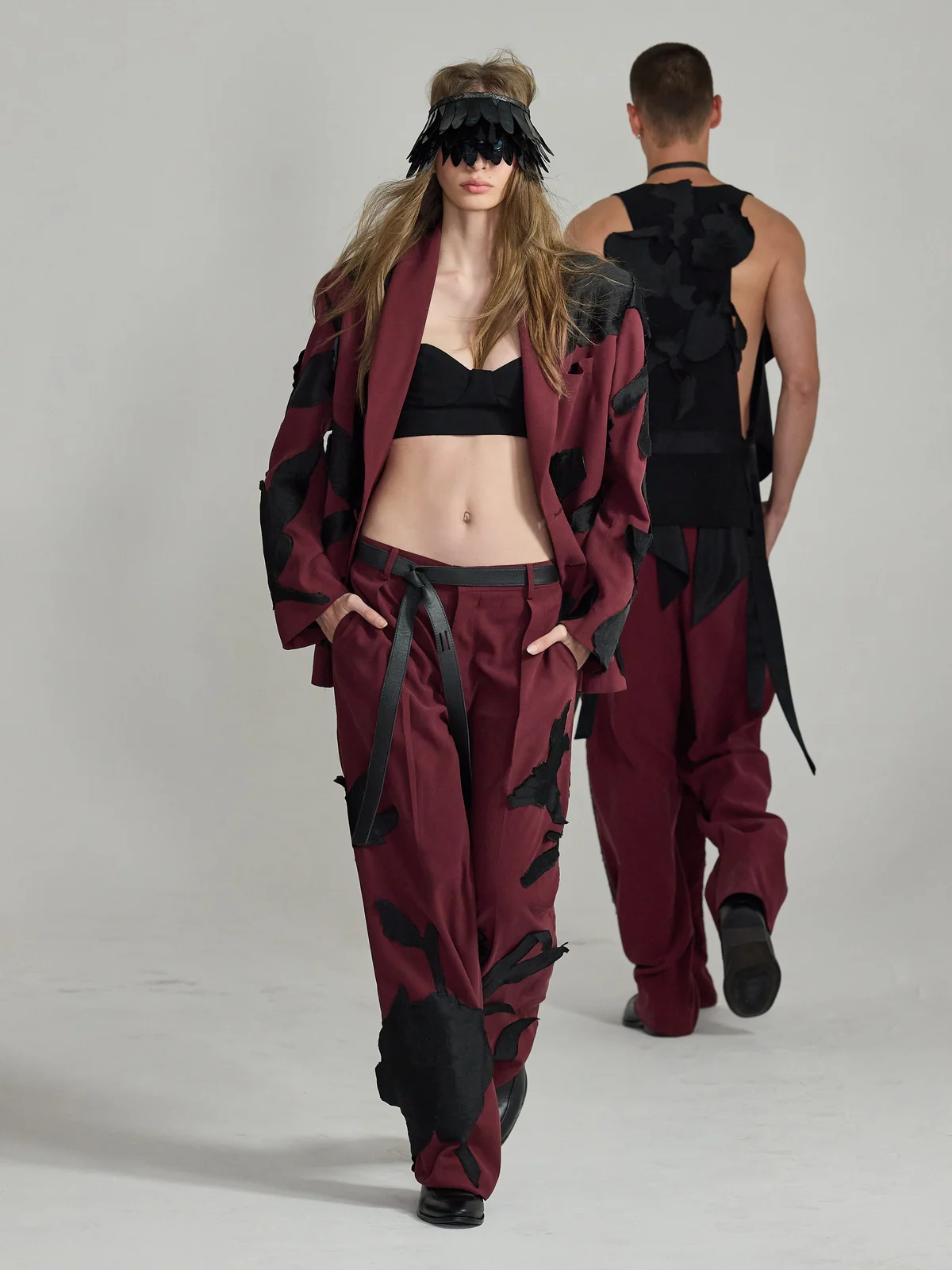
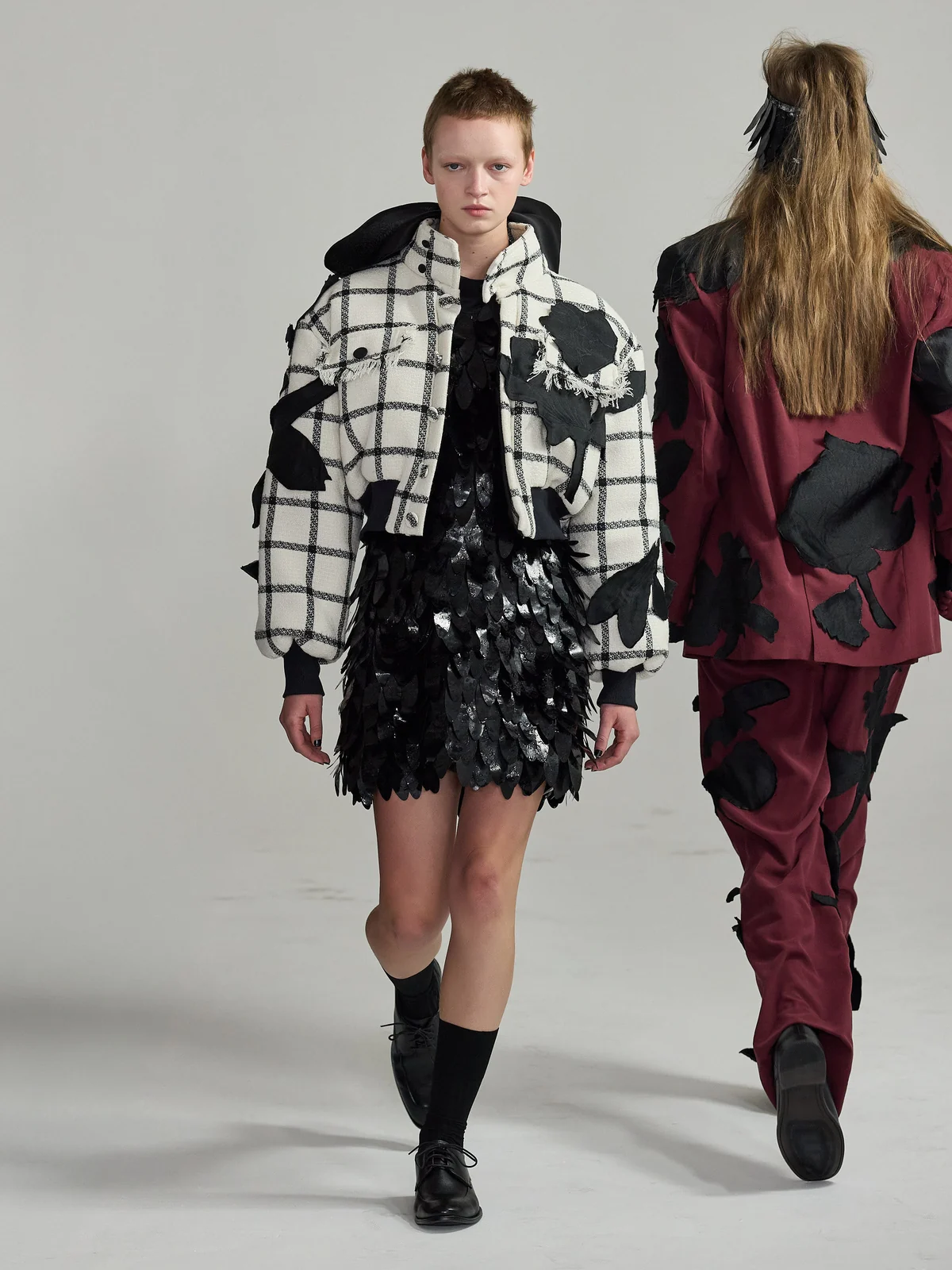
The collection that emerged from a spreadsheet
This is precisely the point where most Brazilian independent brands stop. Many designers launch a collection and never reach a second one. What unlocked for Augusto has a name, and he mentions it jokingly: “I started designing in Excel.” The third collection was born from a sales analysis using the same method he applied in consulting: what sold, what didn’t sell, where there was a market he wasn’t serving.
The answer appeared when the year closed. Half of the revenue had come from the male audience, in low‑ticket products. The origin was accidental. In the previous show, he walked the runway at the end of the presentation wearing a pilot piece, a raw‑cotton shirt. Requests poured in from an audience the brand had never shown for. This year it shows, with lower‑ticket shirts alongside tailoring, jackets and costumes.
Clothing is a system
The way he reads his own craft explains the shift. “Clothing is a system. Clothing is not artwork, a designer is not an artist.” It may be, he concedes, and he recalls those who swapped fashion for cinema, but he treats the exception as an exception: the designer is a form‑and‑function designer, and fashion is applied art. The result is a question he asks in front of spectacular creations. “Cool. How much did it sell for? So, did the cash register turn this month?”
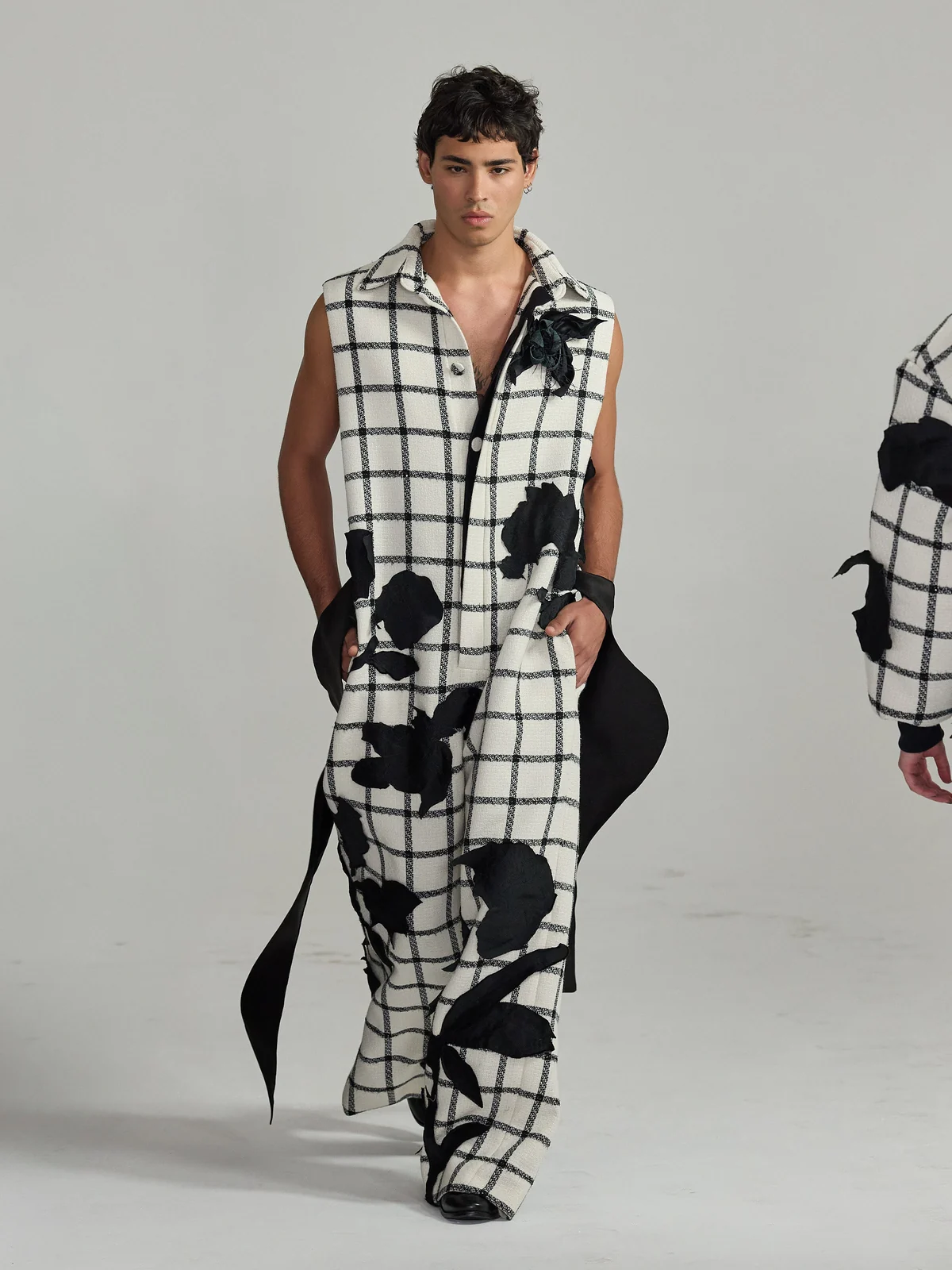
When it comes to his own image, he is less comfortable. He acknowledges that the designer’s persona sells, and that the brand’s growth comes from referrals, from clients who arrive through a friend of a friend. He even recognizes the mechanism: he read, back when he was analyzing social media, about niche experts whose opinion carries more weight than reach. But he draws a line. “You won’t know what I eat, you won’t know what my closet looks like, you won’t know about my home renovation. That is non‑negotiable for me.”
Where artificial intelligence comes in, and where it doesn’t
The relationship with technology inside the studio is split in two. In the administrative side, he has saved time: what used to be a painstaking process of building a pricing table now comes from a written command. In the creative side, his caution is firm. He tried generating a sketch rendering with artificial intelligence and stopped, fearing to see one of his pieces reappear on a foreign commerce platform without his permission. “That business has no regulation whatsoever.” Regarding a machine‑made lookbook, he compares it to a fake photo on a dating app.
The making of the clothing hasn’t changed. It still relies on seamstresses, pattern makers, cutters and model makers, professions he sees becoming scarce in the market. “I hope TikTok helps sharpen the new generation’s interest.”
Asked about the arrival of Asian platforms and the import debate, he doesn’t take the bait. His client also shops there, he says, but on a different purchase occasion. What worries him is something else: the dollar, oil, because polyester is plastic and plastic is oil, and climate change, because it pushes up the price of cotton and wool. “That concerns me far more than containers arriving from China.”
A collection without a theme
The collection he presents this Tuesday has no name or theme, and he jokes that it was the agency’s desperation. The decision was methodological. “I realized we were too subordinate to the story.” Without a narrative to sustain it, there was time for material research, and he went to Première Vision in Paris and to Turkey, as well as working more closely with Focus Store, the atelier’s partner since the first collection. Colored tweeds, leathers sourced from salvage shops and hand‑molded acetate tablets were included. Stylist Heleno Manoel, in his third year of partnership, acted as creative consultant.
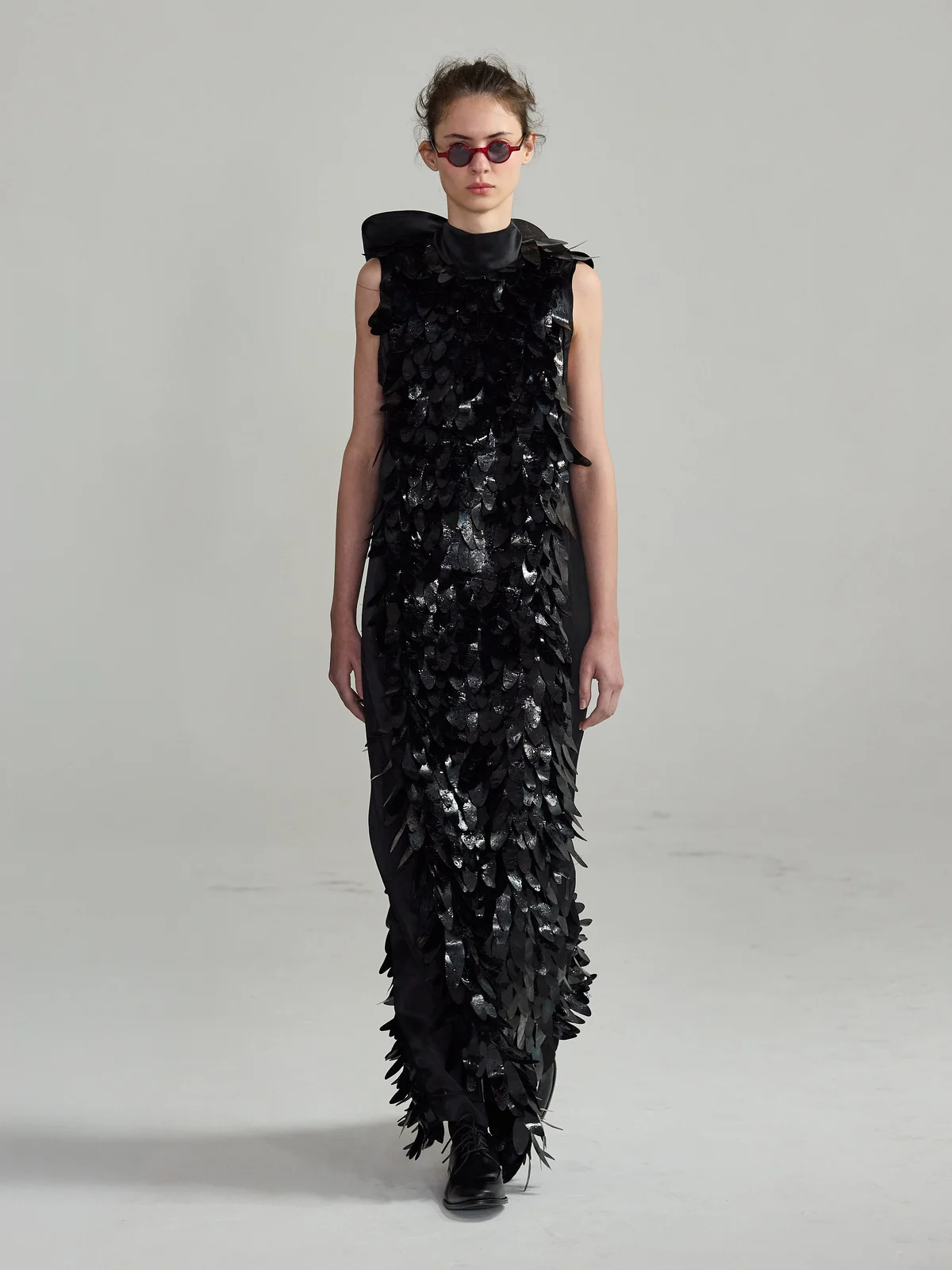
The success criterion now is the object. “I don’t want to walk a jacket so people ask whether it relates to the reference that was in the press release. I want to walk a jacket that stands on its own.”
He calls it maturation, of the brand and the person, and the origin is less noble than it sounds. “It comes from a big sack I’m fed up with. From nhenhenhém, from a bedtime story for a cow to sleep.” He presents once a year, and prefers to call it a showcase rather than a collection: it’s about showing the public what the atelier has learned to make during the period, knowing that the order that arrives later is rarely the piece that walked the runway.
What he expects of the future fits in one sentence, and it isn’t a growth‑plan one. “I don’t want any more little problems of this size. I only want a big problem, where my attention and my judgment matter.” He defines the method with the definition he gives himself. “I’m a good‑humored grump.”
Why he is on The Cover
The The Cover is the house’s record, the list of names that are building tomorrow, and each edition adds a person who stays there forever. It was by listening to this whole trajectory that the choice imposed itself: ten years selling technology to major accounts, a burnout, the crochet my grandmother taught me at eight, and a third collection that was born from a sales spreadsheet. It is a path that does not fit in a press release, and that only makes sense when told from the beginning. It was precisely the case of bringing Augusto to the cover.
Technical sheet
Augusto Paz, 2026 Show. Photography by Zé Takahashi.
From the studio
Pieces from the previous collection, available for order.


Complete TV · Reels
Caos e ordem, do compositor tOmO
See on InstagramFrom Complete





More from Caíque Nucci
View profile
Latest from Complete
 FashionGuccicore: plurality as a language of style
 BeautyISDIN Fusion Water Magic: sun protection with lightness and technology
 The CoverIn the beginning, we couldn't even use the word handicraft.
 DesignTomie Ohtake House‑Studio presents Zanine Caldas
 CultureThievery Corporation, 30 years: the Washington duo that originated in bossa nova
 The CoverBrazil still gives little recognition to genuinely Brazilian authorial fashion.
 InnovationLight has become a building material